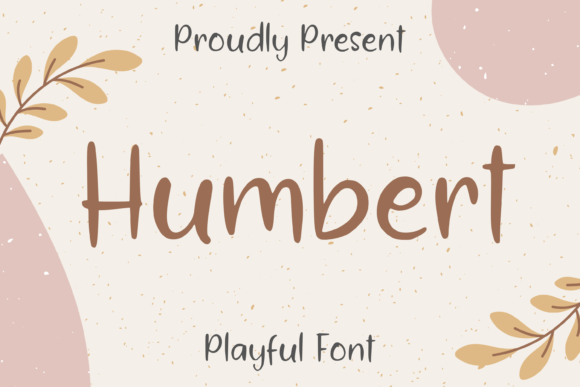
Humbert: A Playful Handwritten Font
There I was, staring at a blank brand board, trying to find the right visual voice for a new boutique coffee shop. The client wanted something warm, approachable, and slightly whimsical—like the kind of place where you’d feel comfortable in your own skin. That’s when I reached for Humbert, a playful and friendly handwritten font that felt just right for the task.
The Personality of Humbert
Humbert carries a casual, almost conversational tone. Its strokes are soft and fluid, with subtle variations that give it a handcrafted feel. It doesn’t scream for attention but rather invites you to lean in and take a closer look. This makes it ideal for brands that want to feel authentic and relatable without being too loud or over-the-top.
When I tested it on a logo concept, the font added a sense of warmth that other more rigid typefaces lacked. It worked well alongside a simple icon, creating a balance between modern and handmade aesthetics. The font’s personality is best described as friendly, expressive, and slightly mischievous—perfect for creative businesses looking to stand out from the crowd.
Real-World Applications
I used Humbert in several design assets for the coffee shop project. On a packaging mockup, it looked great on a label, adding a personal touch that made the product feel more unique. On a business card, it stood out without overwhelming the other elements. In a website header, it provided a nice contrast to a clean sans serif body text, helping to create visual hierarchy without sacrificing readability.
On social media graphics, Humbert brought a sense of fun and creativity. Whether it was an Instagram post promoting a new drink or a Facebook event flyer, the font helped reinforce the brand’s identity. It also worked well in a blog header, giving the content a more engaging and human feel.
Strengths and Limitations
Humbert shines in display and headline roles. It’s not meant for long paragraphs of text, especially in small sizes. In a printed menu or a product description, it would be hard to read and could confuse the audience. For this reason, it’s best used as a decorative or accent font rather than a primary text face.
It also works best in casual or lifestyle branding. A formal corporate brand might find it too informal, and a high-end luxury product could benefit from something more refined. However, for a cozy café, a handmade shop, or a creative studio, Humbert fits like a glove.
Font Pairing and Design Considerations
Pairing Humbert with a serif or sans serif font can help balance its playful nature. A classic serif like Georgia or a modern sans like Helvetica Neue can provide contrast and structure, making the overall design feel more cohesive. When using it alongside another script font, it’s important to choose one with a different style to avoid visual clutter.
Testing Humbert in different contexts is key. I always recommend trying it in various sizes and backgrounds to see how it performs. If it looks good on a large banner but becomes messy on a small tag, it might not be the best choice for all applications. Also, make sure to check the font’s multilingual support if the brand has international ambitions.
Practical Tips for Using Humbert
If you’re considering Humbert for a project, start by testing it in a few different scenarios. Use it on a mockup, a business card, or a social media graphic to get a sense of how it looks in real-world conditions. Pay attention to how it interacts with other design elements and whether it aligns with the brand’s personality.
Also, remember to check the commercial licensing before using it in client work. Some fonts have restrictions on how they can be used, especially in print or digital products. Always verify that you have the right to use the font in your specific context.
For designers working on branding projects, Humbert offers a fresh and approachable option that can add character and charm. It’s not a one-size-fits-all solution, but when used correctly, it can elevate a design and make it feel more personal and authentic.